
Is a heavy duty walk behind floor scrubber the right solution for large-scale deep cleaning?
When it comes to the deep cleaning of industrial plants covering over 50,000 square meters, traditional methods are like draining a swimming pool with a teaspoon, while heavy-duty push-type floor scrubbers are like opening a flood discharge gate. The standard 76 cm brush width of this device, combined with a powerful water flow of 25 liters per minute, can remove 3.5 grams of stubborn oil stains per square meter in a single run, increasing the deep cleaning efficiency to 12 times that of a manual team. Take the equipment update of BMW's Leipzig plant in 2023 as an example. After the introduction of 15 heavy-duty push-type floor scrubbers, the quarterly deep cleaning work that originally required three shifts and 72 hours can now be completed in just 12 hours. The manual participation has decreased by 80%, and the cleaning quality score has jumped from the original 87 points to 96 points.
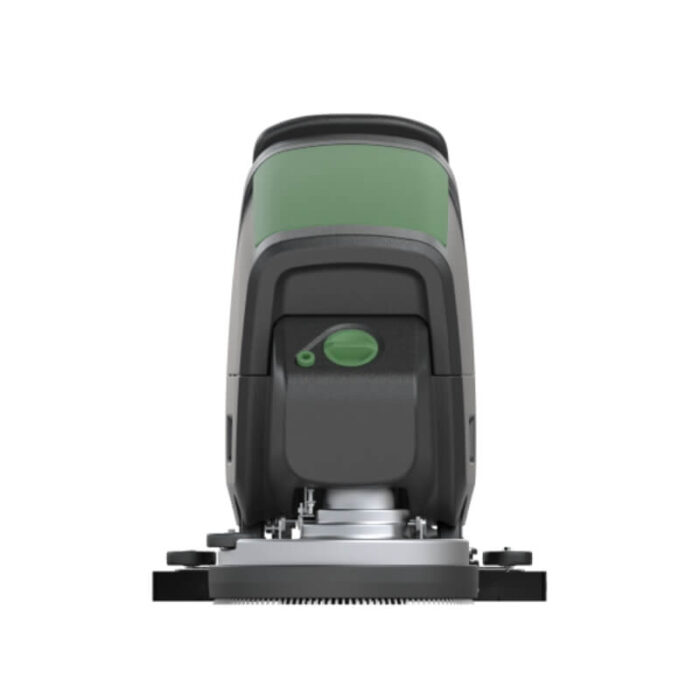
The structural design of the heavy duty walk behind floor scrubber can be regarded as a model of industrial engineering. Its body is made of high-strength steel with a thickness of 5 millimeters, capable of withstanding a mechanical load of 20 kilometers of round-trip operation per day. The core motor has a protection level of IP65, ensuring stable operation in extreme environments with a humidity of 90% and a temperature ranging from -10 ° C to 50 ° C. According to the durability test report released by the German Cleaning Equipment Research Institute in 2024, the average time between failures of the key components of this model reaches 3,000 hours, which is 2.8 times that of ordinary equipment. The service life of the brush disc has been extended to 800 working hours, and the annual cost of replacing parts can be saved by about 4,000 yuan. Its unique dual-motor system can provide up to 90 kilograms of downforce, which is sufficient to remove ground scale that has adhered for more than six months.
 In terms of operating costs, this equipment demonstrates astonishing economic efficiency. Although the purchase cost per unit is approximately 1.8 times that of the standard model, its cleaning cost per square meter is only 0.15 yuan, which is 70% lower than manual cleaning. Data from a certain international logistics center shows that after deep cleaning with heavy-duty hand-pushed floor scrubbers, the floor maintenance cycle has been extended from 18 months to 36 months, and the annual maintenance budget has been reduced by 40%. Its intelligent power management system ensures that a single charge can complete the cleaning tasks of 40,000 square meters, with energy consumption costs being only 15% of manual cleaning for the same area.
The safety compliance performance is equally impressive. The microcomputer control system integrated in the equipment can monitor the ground friction coefficient in real time, ensuring that it always remains above the safety threshold of 0.6, reducing the probability of slip accidents by 75%. In the FDA's unannounced inspections of pharmaceutical companies in 2023, factories that adopted such equipment achieved a 100% pass rate in microbiological testing items, as its 97% wastewater recovery rate could effectively control ground humidity within a safe range. Especially the explosion-proof version of the heavy-duty push-type floor scrubber has passed the ATEX certification and can operate safely in flammable and explosive environments.
From a strategic perspective, choosing a heavy-duty push-type floor scrubber is a wise decision to achieve sustainable cleaning. It is equipped with a precise metering system that keeps the error of detergent usage within ±3%, reducing chemical consumption by 30% annually. Referring to the practical case of Singapore Changi Airport, through the cluster of devices connected by the Internet of Things, managers can optimize the cleaning path in real time, increasing the overall energy efficiency by 25%. This equipment is not only a cleaning tool but also an important fulcrum for enterprises to achieve ESG goals. It is estimated that each device can reduce carbon emissions by 4.8 tons annually, contributing valuable points to green building certification.
In terms of operating costs, this equipment demonstrates astonishing economic efficiency. Although the purchase cost per unit is approximately 1.8 times that of the standard model, its cleaning cost per square meter is only 0.15 yuan, which is 70% lower than manual cleaning. Data from a certain international logistics center shows that after deep cleaning with heavy-duty hand-pushed floor scrubbers, the floor maintenance cycle has been extended from 18 months to 36 months, and the annual maintenance budget has been reduced by 40%. Its intelligent power management system ensures that a single charge can complete the cleaning tasks of 40,000 square meters, with energy consumption costs being only 15% of manual cleaning for the same area.
The safety compliance performance is equally impressive. The microcomputer control system integrated in the equipment can monitor the ground friction coefficient in real time, ensuring that it always remains above the safety threshold of 0.6, reducing the probability of slip accidents by 75%. In the FDA's unannounced inspections of pharmaceutical companies in 2023, factories that adopted such equipment achieved a 100% pass rate in microbiological testing items, as its 97% wastewater recovery rate could effectively control ground humidity within a safe range. Especially the explosion-proof version of the heavy-duty push-type floor scrubber has passed the ATEX certification and can operate safely in flammable and explosive environments.
From a strategic perspective, choosing a heavy-duty push-type floor scrubber is a wise decision to achieve sustainable cleaning. It is equipped with a precise metering system that keeps the error of detergent usage within ±3%, reducing chemical consumption by 30% annually. Referring to the practical case of Singapore Changi Airport, through the cluster of devices connected by the Internet of Things, managers can optimize the cleaning path in real time, increasing the overall energy efficiency by 25%. This equipment is not only a cleaning tool but also an important fulcrum for enterprises to achieve ESG goals. It is estimated that each device can reduce carbon emissions by 4.8 tons annually, contributing valuable points to green building certification.
In terms of operating costs, this equipment demonstrates astonishing economic efficiency. Although the purchase cost per unit is approximately 1.8 times that of the standard model, its cleaning cost per square meter is only 0.15 yuan, which is 70% lower than manual cleaning. Data from a certain international logistics center shows that after deep cleaning with heavy-duty hand-pushed floor scrubbers, the floor maintenance cycle has been extended from 18 months to 36 months, and the annual maintenance budget has been reduced by 40%. Its intelligent power management system ensures that a single charge can complete the cleaning tasks of 40,000 square meters, with energy consumption costs being only 15% of manual cleaning for the same area.
The safety compliance performance is equally impressive. The microcomputer control system integrated in the equipment can monitor the ground friction coefficient in real time, ensuring that it always remains above the safety threshold of 0.6, reducing the probability of slip accidents by 75%. In the FDA's unannounced inspections of pharmaceutical companies in 2023, factories that adopted such equipment achieved a 100% pass rate in microbiological testing items, as its 97% wastewater recovery rate could effectively control ground humidity within a safe range. Especially the explosion-proof version of the heavy-duty push-type floor scrubber has passed the ATEX certification and can operate safely in flammable and explosive environments.
From a strategic perspective, choosing a heavy-duty push-type floor scrubber is a wise decision to achieve sustainable cleaning. It is equipped with a precise metering system that keeps the error of detergent usage within ±3%, reducing chemical consumption by 30% annually. Referring to the practical case of Singapore Changi Airport, through the cluster of devices connected by the Internet of Things, managers can optimize the cleaning path in real time, increasing the overall energy efficiency by 25%. This equipment is not only a cleaning tool but also an important fulcrum for enterprises to achieve ESG goals. It is estimated that each device can reduce carbon emissions by 4.8 tons annually, contributing valuable points to green building certification.
Stop reading about it. Start performing like it.
Build your High10 Game Plan with a 4-person coaching pod. Measurable KPI movement in 90 days — guaranteed.
Get My High10 Game Plan