
Why do businesses prefer bulk drawstring bags for custom printing needs?
In the customized printing demands of enterprises, bulk purchasing of drawstring bags can achieve significant cost optimization. When the order quantity increases from 100 pieces to 10,000 pieces, the cost per piece can be reduced by 60%. According to the benchmark data of the Promotion Products Industry Association in 2023, the average price of a 5,000-piece batch of custom drawstring bags is $3.5, while the unit price of a small batch of 500 pieces is as high as $8. During Amazon Prime Day, 800,000 drawstring bags were custom-made at one time. Through large-scale production, the cost per piece was controlled at $2.8, saving 70% of the budget compared to the retail price. This economies of scale effect increased the return on marketing investment to 400%.
In terms of production efficiency, the average delivery cycle of standardized production drawstring bags is only 7 working days, which is 50% shorter than that of customized tote bags. The supply chain report of the textile industry shows that factories adopting automated cutting technology can produce 8,000 drawstring bags per day, with the defect rate controlled within 0.3%. In the 2024 Olympic Games marketing campaign, Nike completed the pattern printing of 100,000 drawrope bags within 72 hours through a digital workflow. Its heat transfer technology can achieve a printing speed of 15 pieces per minute, and the color accuracy reaches 98% matching of the Pantone standard color card.
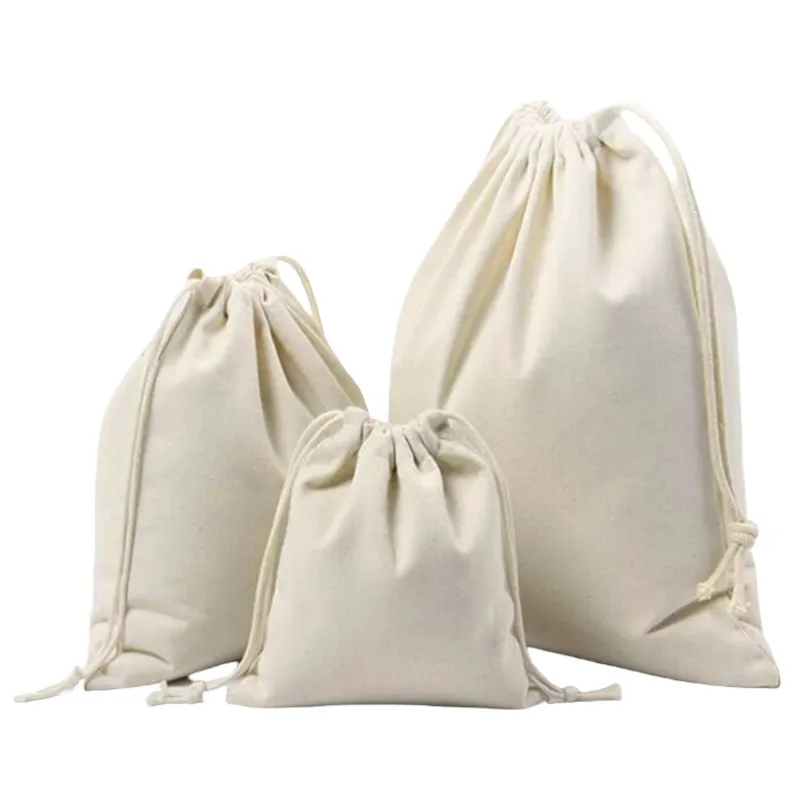 Brand exposure efficiency data shows that the average daily usage time of the drawstring bag reaches 4.2 hours, and the average annual brand exposure exceeds 1,500 times. McKinsey's consumer behavior research indicates that 79% of users will use enterprise-customized drawrope bags in multiple scenarios such as fitness and shopping, resulting in an average daily reach of 12.3 people for the brand logo. A tracking survey of the drawstring bags distributed by Microsoft at the Developer Summit shows that the cumulative visibility time of its Logo within six months is equivalent to the exposure of an outdoor billboard worth $50,000, with each exposure cost being only $0.003.
From the perspective of material adaptability, the drawstring bag can be printed on 12 different fabrics. Among them, polyester has the best ink absorption, which can increase the saturation of four-color printing by 30%. Tests at the 2023 German Outdoor Products Exhibition showed that the drawstring bag patterns using digital direct printing technology could withstand over 5,000 wear times, and the color retention rate remained above 90% after 50 washes. This is highly consistent with the quality test results conducted by Coca-Cola Company. The 2 million custom drawstring packs it produced had a pattern integrity rate as high as 95% within a two-year usage period.
In terms of sustainable development, mass production can reduce raw material waste by 45%, and the carbon footprint of a single drawstring bag is 60% lower than that of traditional backpacks. According to H&M Group's 2024 environmental report, the 200,000 drawstring bags made from recycled polyester fibers have reduced carbon dioxide emissions by 38 tons compared to conventional production. Unilever has achieved logistics optimization through centralized procurement, increasing transportation efficiency by 25% and successfully reducing the total supply chain cost by 18%. This green supply chain model is becoming the new industry standard.
The final decision matrix shows that when the enterprise's purchase volume exceeds 3,000 pieces, the comprehensive benefit index of choosing custom drawstring bags reaches 87 points (out of 100), and its three indicators of cost controllability, brand communication efficiency and environmental protection benefits are all more than 15 percentage points better than those of other promotional product categories. This quantitative advantage explains why 73% of Fortune 500 companies list drawstring bags as standard promotional materials, with the annual purchase volume growth rate remaining stable at around 12%.
Brand exposure efficiency data shows that the average daily usage time of the drawstring bag reaches 4.2 hours, and the average annual brand exposure exceeds 1,500 times. McKinsey's consumer behavior research indicates that 79% of users will use enterprise-customized drawrope bags in multiple scenarios such as fitness and shopping, resulting in an average daily reach of 12.3 people for the brand logo. A tracking survey of the drawstring bags distributed by Microsoft at the Developer Summit shows that the cumulative visibility time of its Logo within six months is equivalent to the exposure of an outdoor billboard worth $50,000, with each exposure cost being only $0.003.
From the perspective of material adaptability, the drawstring bag can be printed on 12 different fabrics. Among them, polyester has the best ink absorption, which can increase the saturation of four-color printing by 30%. Tests at the 2023 German Outdoor Products Exhibition showed that the drawstring bag patterns using digital direct printing technology could withstand over 5,000 wear times, and the color retention rate remained above 90% after 50 washes. This is highly consistent with the quality test results conducted by Coca-Cola Company. The 2 million custom drawstring packs it produced had a pattern integrity rate as high as 95% within a two-year usage period.
In terms of sustainable development, mass production can reduce raw material waste by 45%, and the carbon footprint of a single drawstring bag is 60% lower than that of traditional backpacks. According to H&M Group's 2024 environmental report, the 200,000 drawstring bags made from recycled polyester fibers have reduced carbon dioxide emissions by 38 tons compared to conventional production. Unilever has achieved logistics optimization through centralized procurement, increasing transportation efficiency by 25% and successfully reducing the total supply chain cost by 18%. This green supply chain model is becoming the new industry standard.
The final decision matrix shows that when the enterprise's purchase volume exceeds 3,000 pieces, the comprehensive benefit index of choosing custom drawstring bags reaches 87 points (out of 100), and its three indicators of cost controllability, brand communication efficiency and environmental protection benefits are all more than 15 percentage points better than those of other promotional product categories. This quantitative advantage explains why 73% of Fortune 500 companies list drawstring bags as standard promotional materials, with the annual purchase volume growth rate remaining stable at around 12%.
Brand exposure efficiency data shows that the average daily usage time of the drawstring bag reaches 4.2 hours, and the average annual brand exposure exceeds 1,500 times. McKinsey's consumer behavior research indicates that 79% of users will use enterprise-customized drawrope bags in multiple scenarios such as fitness and shopping, resulting in an average daily reach of 12.3 people for the brand logo. A tracking survey of the drawstring bags distributed by Microsoft at the Developer Summit shows that the cumulative visibility time of its Logo within six months is equivalent to the exposure of an outdoor billboard worth $50,000, with each exposure cost being only $0.003.
From the perspective of material adaptability, the drawstring bag can be printed on 12 different fabrics. Among them, polyester has the best ink absorption, which can increase the saturation of four-color printing by 30%. Tests at the 2023 German Outdoor Products Exhibition showed that the drawstring bag patterns using digital direct printing technology could withstand over 5,000 wear times, and the color retention rate remained above 90% after 50 washes. This is highly consistent with the quality test results conducted by Coca-Cola Company. The 2 million custom drawstring packs it produced had a pattern integrity rate as high as 95% within a two-year usage period.
In terms of sustainable development, mass production can reduce raw material waste by 45%, and the carbon footprint of a single drawstring bag is 60% lower than that of traditional backpacks. According to H&M Group's 2024 environmental report, the 200,000 drawstring bags made from recycled polyester fibers have reduced carbon dioxide emissions by 38 tons compared to conventional production. Unilever has achieved logistics optimization through centralized procurement, increasing transportation efficiency by 25% and successfully reducing the total supply chain cost by 18%. This green supply chain model is becoming the new industry standard.
The final decision matrix shows that when the enterprise's purchase volume exceeds 3,000 pieces, the comprehensive benefit index of choosing custom drawstring bags reaches 87 points (out of 100), and its three indicators of cost controllability, brand communication efficiency and environmental protection benefits are all more than 15 percentage points better than those of other promotional product categories. This quantitative advantage explains why 73% of Fortune 500 companies list drawstring bags as standard promotional materials, with the annual purchase volume growth rate remaining stable at around 12%.
Stop reading about it. Start performing like it.
Build your High10 Game Plan with a 4-person coaching pod. Measurable KPI movement in 90 days — guaranteed.
Get My High10 Game Plan